
22 June 2026 · AruYami Naturals
Brown Rice vs White Rice: Making the Healthier Switch
Curious whether brown rice really beats white? Here's a warm, practical guide to the differences, single-polished rice as a middle path, and easy ways to switch your family.
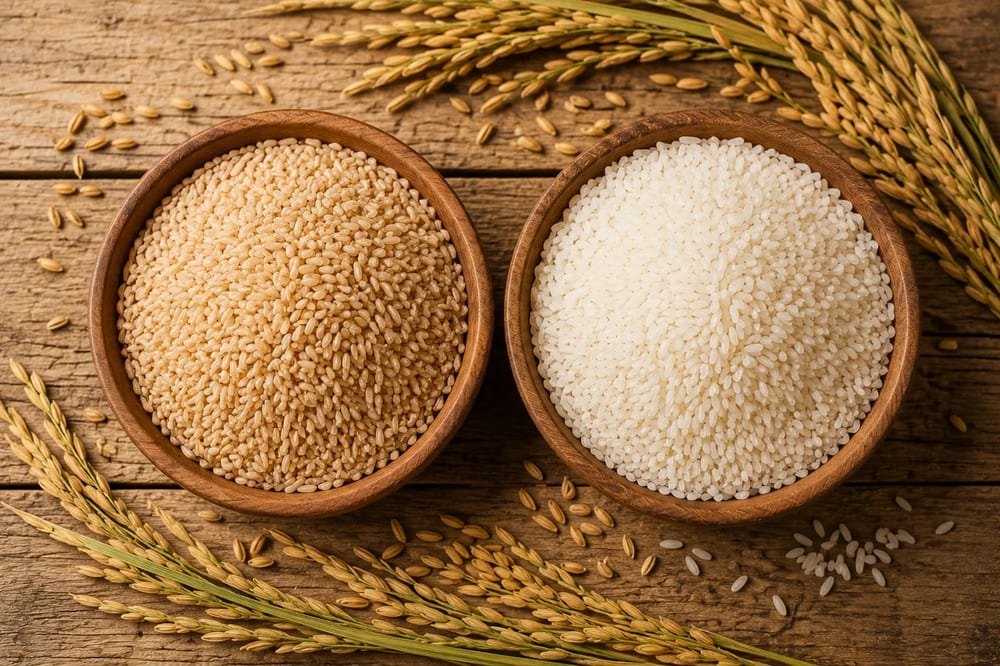
If you have ever stood in the kitchen wondering whether to cook brown rice or the soft white rice your family loves, you are not alone. Rice is the heart of most South Indian meals, from morning idli to a comforting plate of curd rice at night. So when someone says "switch to brown rice," it can feel like a big change. Let us walk through it gently and practically.
Brown Rice vs White Rice: The Short Answer
Both are the same grain. Brown rice has only its outer husk removed, so it keeps the fibre-rich bran and the nutrient-dense germ. White rice is polished further until only the soft starchy centre remains.
That single difference explains everything else: brown rice carries more fibre and nutrients, while white rice cooks faster, tastes milder and keeps longer. Neither is a villain. If you eat rice twice a day, leaning even slightly towards less-polished grain is the change that adds up.
| Brown rice | White rice | |
|---|---|---|
| What is removed | Only the husk | Husk, bran and germ |
| Fibre | Higher — the bran is intact | Much lower — polished away |
| Texture | Nutty, chewier, firmer | Soft, fluffy, familiar |
| Cooking time | Longer; soak it first | Quick |
| Water needed | About 2 to 2.5 cups per cup | About 1.5 to 2 cups per cup |
| Shelf life | Shorter — natural oils in the bran | Longer |
| Best for | Everyday nourishment, fuller meals | Festive dishes, soft comfort food |
The Difference Between Brown Rice and White Rice
Every grain of rice starts the same way, wrapped in layers. After the outer husk is removed, you get brown rice, which still carries its bran and germ. These layers hold most of the grain's natural fibre, B vitamins, minerals and good fats.
White rice goes a step further. The bran and germ are polished away, leaving the soft white starchy centre. This makes the rice cook faster, store longer and taste milder, but a good part of the grain's natural goodness is polished off along with the bran.
In short:
- Brown rice keeps the bran and germ, so it is higher in fibre and naturally richer in nutrients.
- White rice is fully polished, so it is lighter and quicker to cook but loses much of its fibre.
Is Brown Rice Better Than White Rice?
For everyday eating, brown rice has the nutritional edge — but it is worth being honest about both sides.
Where brown rice wins. The extra fibre is its biggest practical advantage. Fibre helps you feel full and satisfied, supports comfortable digestion, and slows down how quickly a meal is absorbed, so energy arrives more steadily instead of all at once. The germ also brings B vitamins, minerals and natural oils that polishing removes.
Where white rice still makes sense. It is gentle, soft and quick, which genuinely matters for young children, elders, anyone recovering from illness, and festive dishes where texture is the whole point. A plate of white rice is not a failure.
This is simply about eating closer to how the grain grows, not a cure for anything. Whole grains are one honest, time-tested part of a balanced plate alongside dal, vegetables and curd. If you are managing a health condition, your doctor's advice should always come first.
Brown Rice vs White Rice: Taste and Texture
This is the part families actually notice, and it is worth setting expectations honestly.
Brown rice tastes nuttier and slightly earthy, with a firmer, chewier bite. The grains stay separate rather than melting together. White rice is milder and softer, which is why it disappears so easily under sambar or rasam.
If your family finds brown rice "hard," the cause is almost always cooking method rather than the rice itself — undercooked bran is chewy in a way that no amount of ghee will rescue. Cooked properly, brown rice is pleasantly soft with a little body to it.
Brown rice shines in pulihora, lemon rice, vegetable pulao, khichdi and even a hearty curd rice once you get the texture right. For dishes where you want each grain distinct, it is genuinely better than white rice.
Cooking Brown Rice vs White Rice
Brown rice has a reputation for turning out hard, but a few small habits fix that:
- Soak it for 30 to 45 minutes before cooking. This softens the bran and shortens cooking time. This one step matters more than any other.
- Add more water. Use roughly 2 to 2.5 cups of water for every 1 cup of rice, a little more than for white rice.
- Give it time. In a pressure cooker, allow a couple of extra whistles; on the stove, let it simmer until tender.
- Let it rest for 5 to 10 minutes after cooking so the grains finish softening.
- Do not stir it much while it cooks, or the grains break and turn sticky.
A practical note on storage, since this catches people out: the natural oils in the bran mean brown rice does not keep as long as white rice. Buy it in smaller quantities, store it in an airtight jar away from heat, and use it within a few months rather than stocking a year's supply.
Single-Polished Rice: A Friendly Middle Path
Going straight from white rice to fully brown rice can feel like a jump, especially for elders and children used to a softer texture. This is where single-polished rice is a beautiful compromise.
Single-polished rice has only a light polish, so it keeps more of the bran than fully white rice while cooking softer and tasting closer to what your family already enjoys. Think of it as a comfortable middle step: more nourishment than fully polished rice, less of an adjustment than fully brown rice. Many traditional households quietly preferred this balance long before it became a trend.
For a lot of families, this — not brown rice — is the switch that actually sticks.
Switching From White Rice to Brown Rice
The kindest way to change a food habit is slowly, so nobody feels it as a loss.
- Mix it first. Start with three parts white rice to one part brown or single-polished, then shift the ratio over a few weeks.
- Begin with mixed dishes. Khichdi, pulao and lemon rice carry brown rice flavour easily.
- Cook it well. A soft, fluffy result wins more hearts than a lecture ever will.
- Keep white rice for festivals. Removing it entirely usually backfires.
- Talk about it warmly. Let the family taste, compare and choose what feels right.
There is no single "perfect" rice for every home. The goal is simply to lean a little more towards whole, naturally processed grains, at a pace your family is happy with.
If you would like to begin this gentle switch with chemical-free, traditionally milled grains sourced straight from farms, explore our brown rice, single-polished rice and red rice, or browse the full range of natural rice and pick the polish that suits your family best. Eat pure, live healthy, one comforting plate at a time.
Frequently asked questionsతరచుగా అడిగే ప్రశ్నలు
Is brown rice better than white rice?బ్రౌన్ రైస్ వైట్ రైస్ కంటే మంచిదా?
For everyday nutrition, yes — brown rice keeps its bran and germ, so it has more fibre, B vitamins and minerals than fully polished white rice. White rice is lighter and quicker to cook. If the switch feels big, single-polished rice is a gentle middle path.రోజువారీ పోషణకు అవును — బ్రౌన్ రైస్లో బ్రాన్, జెర్మ్ ఉంటాయి కాబట్టి ఫైబర్, బి విటమిన్లు, ఖనిజాలు ఎక్కువ. తెల్ల బియ్యం తేలికగా, వేగంగా ఉడుకుతుంది. మార్పు పెద్దదిగా అనిపిస్తే సింగిల్-పాలిష్ బియ్యం మంచి మధ్యే మార్గం.
Does brown rice cook the same as white rice?బ్రౌన్ రైస్ వైట్ రైస్ లాగే ఉడుకుతుందా?
No — brown rice needs more water and longer cooking (about 35–40 minutes, or a few extra whistles in a pressure cooker) because the bran layer takes time to soften. Soaking it for 30–60 minutes first makes it cook faster and turn out fluffier.కాదు — బ్రాన్ పొర మెత్తబడటానికి సమయం పడుతుంది కాబట్టి బ్రౌన్ రైస్కు ఎక్కువ నీళ్లు, ఎక్కువ సమయం (కుక్కర్లో కొన్ని అదనపు విజిల్స్) అవసరం. ముందుగా 30–60 నిమిషాలు నానబెడితే వేగంగా ఉడికి మెత్తగా వస్తుంది.
Why is brown rice better than white rice?బ్రౌన్ రైస్ ఎందుకు మంచిది?
Brown rice still has its fibre-rich bran and nutrient-dense germ, which are polished away in white rice. That extra fibre helps you feel full longer and releases energy more slowly, which is gentler on blood sugar than soft white rice.బ్రౌన్ రైస్లో ఫైబర్ ఎక్కువగా ఉండే బ్రాన్, పోషకాలతో నిండిన జెర్మ్ ఉంటాయి — తెల్ల బియ్యంలో అవి తీసివేయబడతాయి. ఆ అదనపు ఫైబర్ ఎక్కువసేపు కడుపు నిండినట్లు ఉంచుతుంది, శక్తిని నెమ్మదిగా విడుదల చేస్తుంది.
Is there a difference between white and brown rice?తెల్ల బియ్యానికి, బ్రౌన్ రైస్కు తేడా ఉందా?
Both start as the same grain. Brown rice only has the outer husk removed, keeping the bran and germ. White rice is polished further, removing those layers for a softer texture and longer shelf life — but losing much of the fibre and nutrients along the way.రెండూ ఒకే ధాన్యం. బ్రౌన్ రైస్కు పైపొట్టు మాత్రమే తీస్తారు, బ్రాన్, జెర్మ్ ఉంటాయి. తెల్ల బియ్యాన్ని ఇంకా పాలిష్ చేసి ఆ పొరలు తీస్తారు — మెత్తగా, ఎక్కువ కాలం నిల్వ ఉంటుంది కానీ ఫైబర్, పోషకాలు చాలావరకు పోతాయి.
Which is better, brown or white rice?బ్రౌన్ లేదా వైట్ రైస్ — ఏది మంచిది?
Brown rice wins on fibre and nutrients; white rice wins on softness, cooking speed and familiarity. There is no single right answer — many families do best mixing both, or choosing single-polished rice, which keeps some bran while staying easy to cook and digest.ఫైబర్, పోషకాల్లో బ్రౌన్ రైస్ ముందు; మెత్తదనం, వేగం, అలవాటులో తెల్ల బియ్యం ముందు. ఒకే సమాధానం లేదు — చాలా కుటుంబాలు రెండింటినీ కలిపి, లేదా సింగిల్-పాలిష్ బియ్యాన్ని ఎంచుకుంటాయి.
Bring tradition & nature to your kitchen
Shop AruYami Naturals